
How to Start Investing With a Small Amount of Money
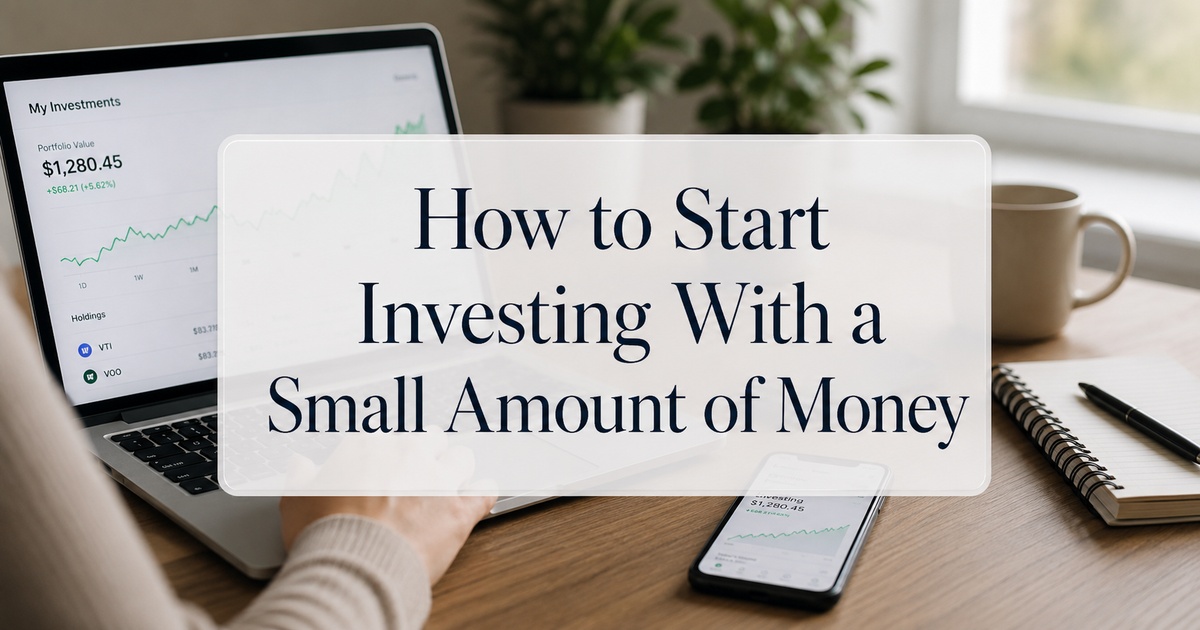
The most persistent myth in investing is that it begins at some respectable number, that small money should wait until it grows up. The opposite is true. Modern brokers have removed almost every minimum, fractional investing lets a modest sum buy slices of entire markets, and the habits you build with small amounts are precisely the ones large amounts will need later. What follows is the whole path from “I have a little set aside” to “I am an investor,” in five honest steps.
Why small starts beat big plans
A small start buys you three things no amount of research can. Real experience of watching your money fluctuate, the emotional education every investor eventually pays for. Time in the market, which is the raw fuel of compounding. And momentum: people who start with a little and automate it almost always end up investing more, while people waiting for the perfect lump sum are frequently still waiting years later.
The tuition for early mistakes is also cheapest now. An error made with a small balance is a lesson; the same error made later with serious money is a setback.
Step one: confirm you are ready
Two pre-checks protect you from investing money that has a prior commitment. First, expensive debt: if you carry high-interest balances, paying them down is a certain reduction in interest cost when the rate and balance are fixed that markets cannot reliably beat, so they come first. Second, a starter emergency cushion, so a surprise bill never forces you to sell investments at the worst possible moment.
If those are handled, even modestly, the money you invest can genuinely stay invested, which is the entire game.
Step two: choose where the account lives
Before picking a broker, check whether your country offers tax-advantaged accounts for investing; sheltering growth from tax is the easiest performance boost available and usually worth claiming from the first unit invested. Then choose a regulated, low-cost platform that supports small or fractional purchases and, ideally, automatic recurring investments.
Comparison points worth five minutes: account fees, trading or fund-dealing charges, the minimum investment, and whether your country’s investor-protection scheme covers the platform. Flashy app design is not on the list.
Step three: choose what to buy
For a first investment, the boring consensus is boring because it works: a broad, low-cost index fund or ETF that holds hundreds or thousands of companies across the market, global versions exist precisely for investors who do not want to bet on any single country. One purchase delivers instant diversification, which is the cheapest risk reduction in finance.
The fund-versus-ETF choice is mechanics rather than destiny, and the stock market basics cover why owning the whole haystack beats hunting needles. What matters at this stage is breadth and a low ongoing fee, with small balances especially, percentage fees are the silent killer.
Step four: automate before motivation fades
Set a recurring investment for an amount you will not miss, timed to the day you are paid. Automation converts investing from a monthly decision into a background process, and background processes survive busy months, market scares, and dwindling enthusiasm in a way willpower never does.
Then practise the real skill: leaving it alone. Check quarterly if you must, increase the contribution when income rises, and treat market drops as the price of admission rather than an alarm.
What to ignore
- Hot tips and trending stocks, by the time a tip reaches you, its price already includes it.
- Day-trading content promising fast doubling; the visible winners are survivorship bias wearing a microphone.
- Complex products you cannot explain in one sentence, leverage, exotic certificates, anything with a countdown timer.
- The urge to wait for a crash before starting; missed growth while waiting routinely costs more than the dip saves.
What growth realistically looks like
Honesty matters here: a small sum invested once will not transform anything quickly, and the first years of any compounding curve look unimpressive by design. The transformation comes from the combination, a start, plus automation, plus annual increases, plus decades. Investors who quietly raise their contribution each year are the ones who later seem to have done something miraculous. The miracle was the habit.
From first deposit to lifelong system
The opening deposit is an event; wealth comes from what you bolt onto it. The highest-value bolt-on is an escalation rule made now, while resolve is fresh: every future pay rise lifts the monthly investment by a fixed share, say half, before the new income reaches the spending account. A modest start that escalates beats an ambitious start that stalls, because the escalator quietly multiplies the contribution several times over a career without ever feeling like sacrifice. Add a windfall rule in the same spirit: bonuses and unexpected money get split by a formula you chose in advance, not by the mood of the week they arrive.
Then pre-arm yourself for the first real drop, because it is coming and it is survivable. Decide today, in writing if it helps, what you will do when the balance falls hard: nothing, except continue the automatic purchase, which will now be buying the same funds at a discount. Investors who written-down this intention ahead of time sell far less often than those improvising under red numbers. A yearly fifteen-minute review completes the system: confirm the automation ran, nudge the amount upward, rebalance if anything drifted far from plan, and close the tab. Everything beyond that, forecasts, hot funds, daily prices, is entertainment wearing the costume of diligence.
Beginner questions, straight answers
How much do I actually need to start?
On most modern platforms, the practical minimum is whatever buys one fractional unit, effectively trivial. The better question is what monthly amount you can automate and sustain, because the stream matters far more than the starting pool.
Should I wait for the market to drop first?
Timing the market consistently is something even professionals fail at. For regular small contributions, you automatically buy through highs and lows anyway, which removes the dilemma entirely.
Is it worth investing if I might need the money in a year?
No, short-horizon money belongs in savings, because markets can be down exactly when you need to withdraw. Investing suits goals at least several years away.
One global fund feels too simple. Is it enough?
Simple is not the same as inadequate. A single broad global fund holds more companies than any stock-picker could follow, and many lifelong investors never need more. Complexity can come later, if ever, with a reason attached.
Nothing here is a recommendation to buy any particular product. Investments can lose value, and tax rules differ by country, check your local details or consult a licensed adviser before investing.
The platform decision comes before the fund decision
A small balance is especially vulnerable to fixed account fees, foreign-exchange charges and withdrawal costs. Check that the provider is regulated, client assets are held separately where required, and the investor-protection arrangement in your country is understood. Protection normally covers provider failure or missing assets under defined conditions; it does not protect against market losses. Avoid platforms that make it difficult to identify the legal entity holding the account.
A practical first ninety days
Month one can be used to build a starter cash buffer and learn the account interface without buying. In month two, write a simple plan covering goal, horizon, contribution and acceptable risk. In month three, make a small diversified purchase and automate the next contribution if fees make that sensible. This pace is intentionally uneventful. A beginner benefits more from a repeatable process than from trying to enter the market on a perfect day.
Small investors are frequent targets for hype
Be cautious with guaranteed-return language, private messaging groups, pressure to transfer crypto, “recovery” services and influencers who do not disclose compensation. Verify a firm through the regulator’s register using contact details found independently. A legitimate investment can still be unsuitable, but an unverified provider adds a separate fraud risk that diversification cannot solve.
Supporting articles for this decision
- The Stock Market for Beginners: What You Actually Need to Know
- Index Funds vs ETFs: Which Should You Pick?
- Bonds and Bond Funds for Beginners
What changes across borders
International readers should separate the principle in this article from the mechanism available locally. The principle behind start investing with little money may be portable, but product regulation, tax wrappers, fees, market access, custody and currency exposure need local checks. Check the legal provider, official eligibility rules and complaint route before money or personal data is committed.
Use three layers of evidence: an official source for the rule, the current contract or product document for the terms, and the household budget for affordability. Write down where the guidance in “How to Start Investing With a Small Amount of Money” fits and where it does not. This simple note helps expose sales claims that skip fees, restrictions or an inconvenient downside.
Cross-border cases need a written fact pattern. Record where the person lives, performs the work, holds the account and receives payment, then identify which authority governs each issue. Professional advice becomes important when two systems could claim the same income or asset.

Written by Gautam Singh
Personal finance editor focused on clear money explanations, practical decision-making, and responsible financial education.
Related money articles

Bonds and Bond Funds for Beginners
A beginner-friendly explanation of bond prices, yields, credit risk, duration, currency and the differences between individual bonds and funds.
Index Funds vs ETFs: Which Should You Pick?
Index funds vs ETFs compared in plain language: how each works, the differences that matter, and how to choose the right one…

The Stock Market for Beginners: What You Actually Need to Know
The stock market for beginners, explained plainly: what shares are, why prices move, what returns are realistic, and how to start without…